Custom setups
Built around your experiment
Reconfigure the frame or combine multiple machines for specialized, coordinated test arrangements.
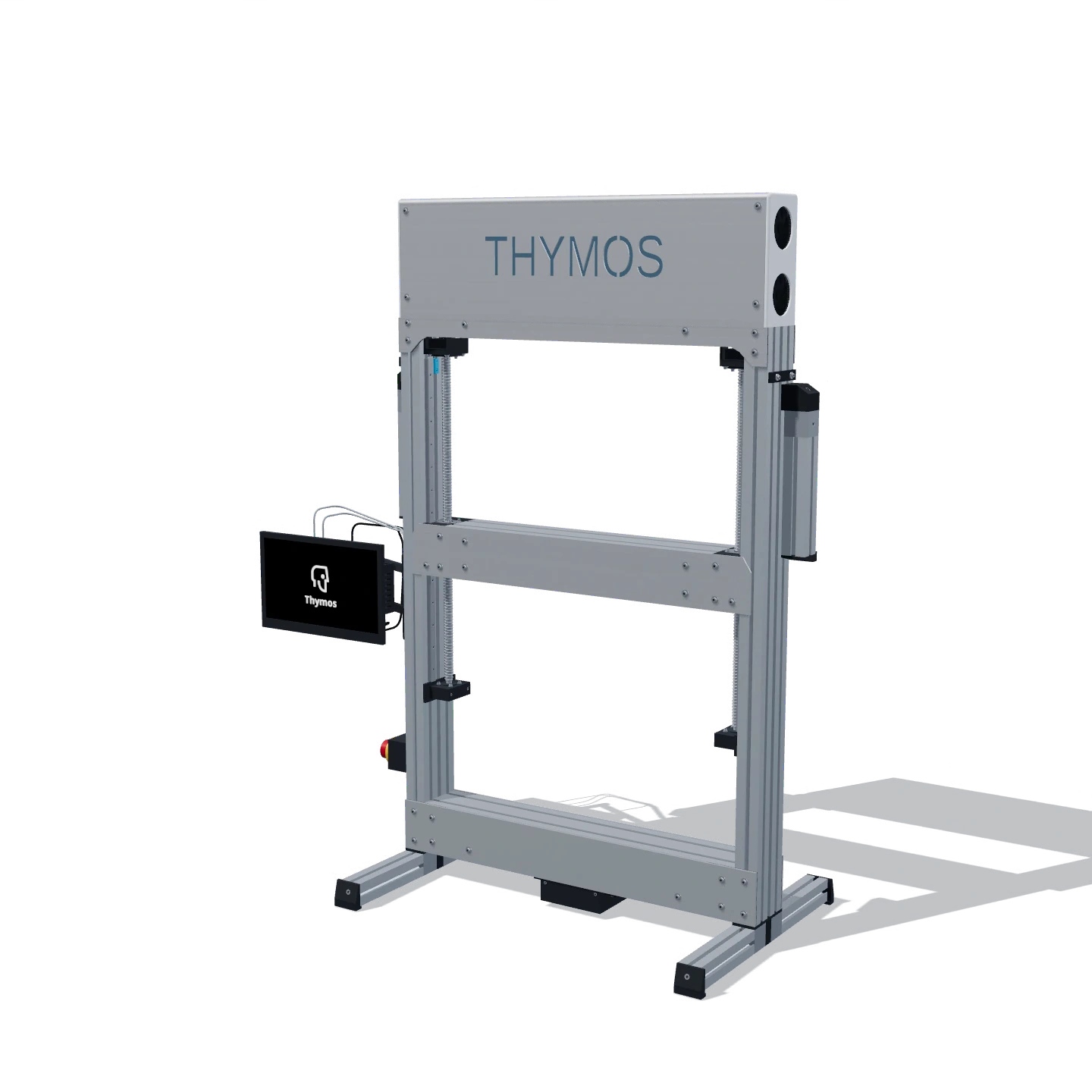
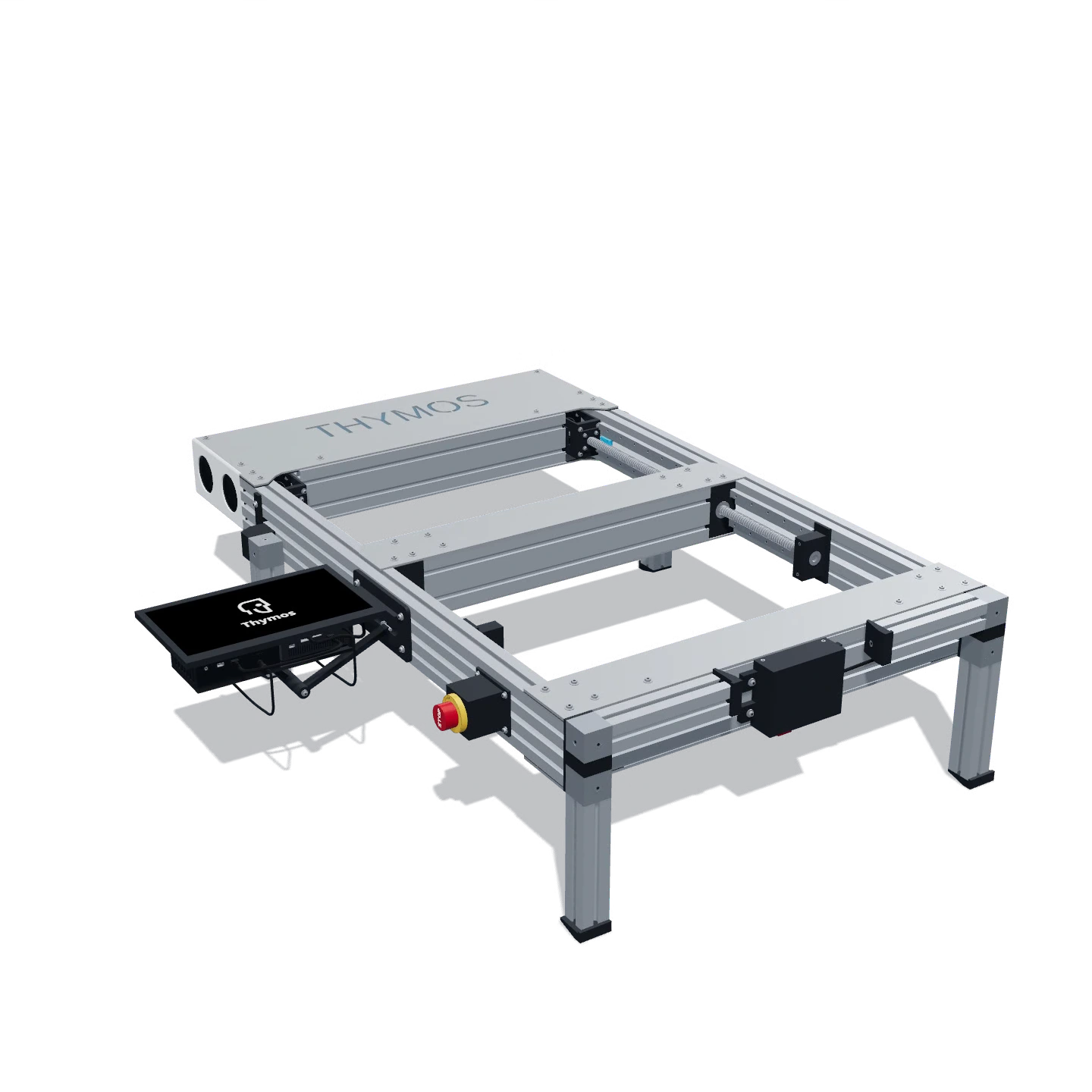
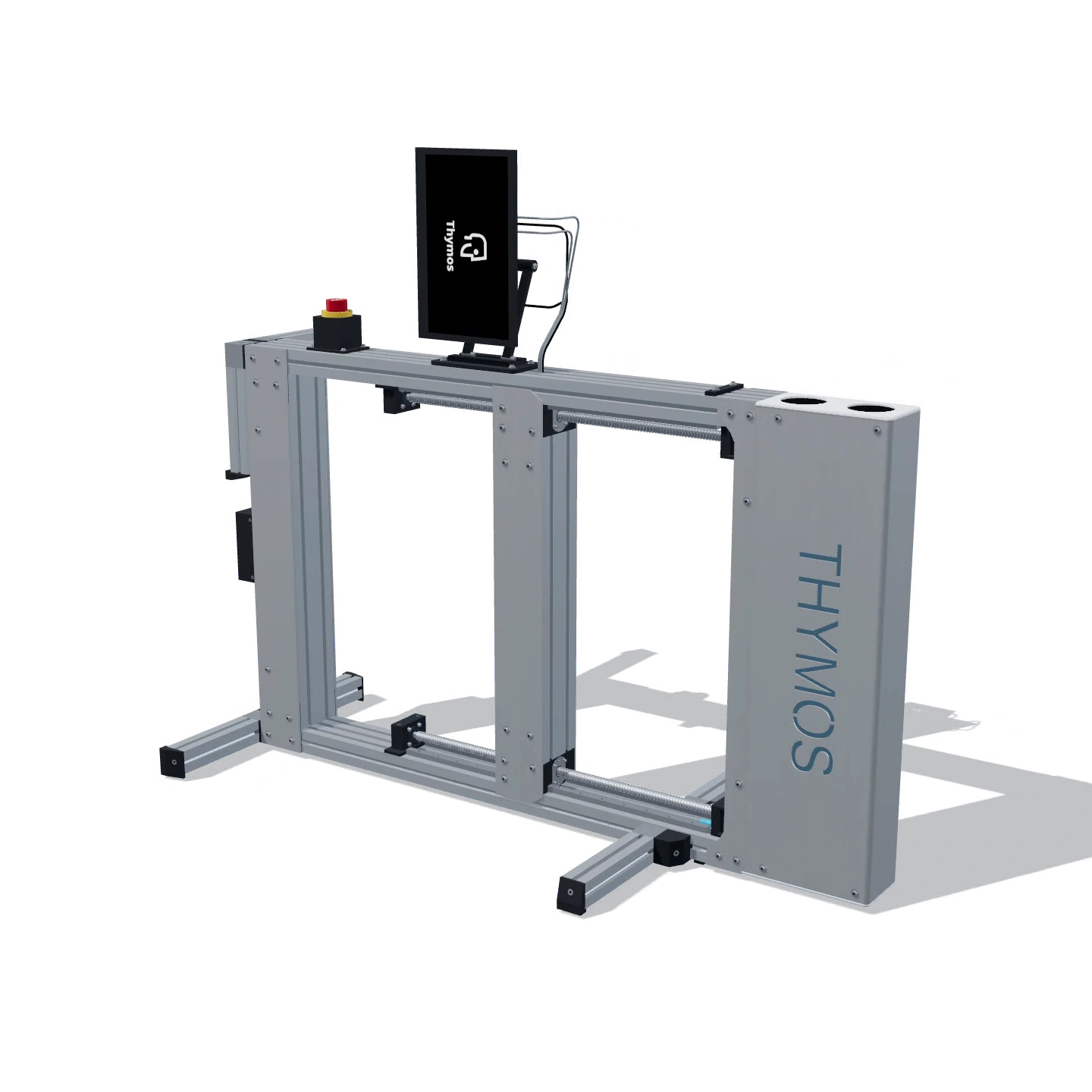
Reconfigure the same compact frame in vertical, horizontal, or any other arrangements and change fixtures around the specimen instead of building a dedicated rig for each test.
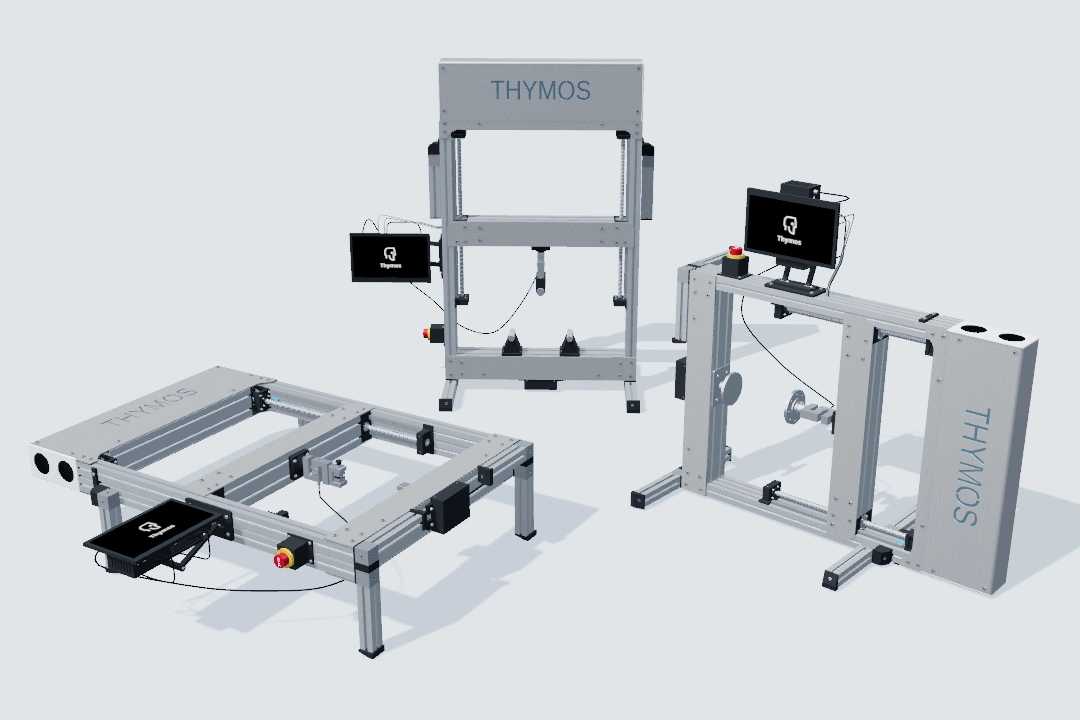
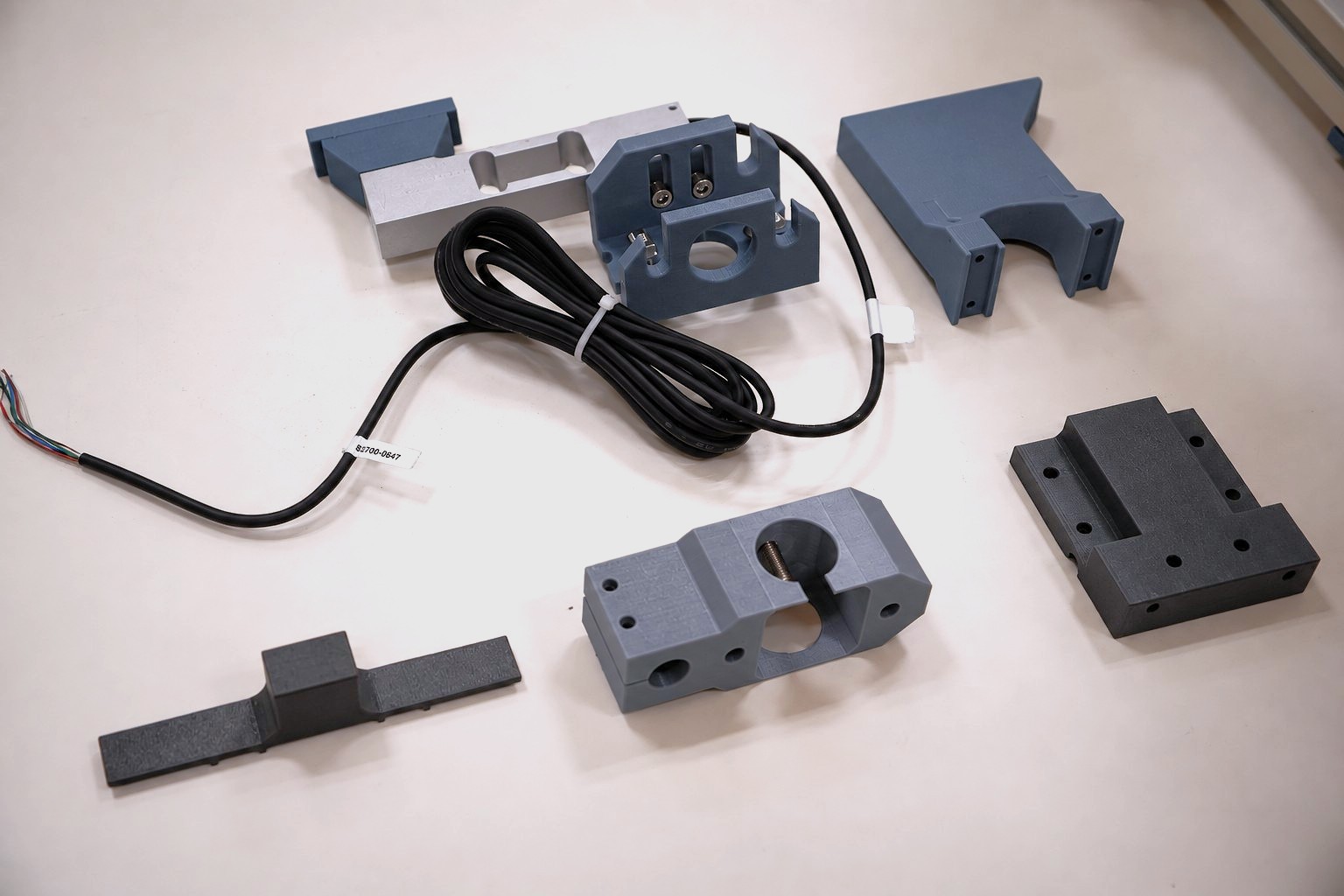
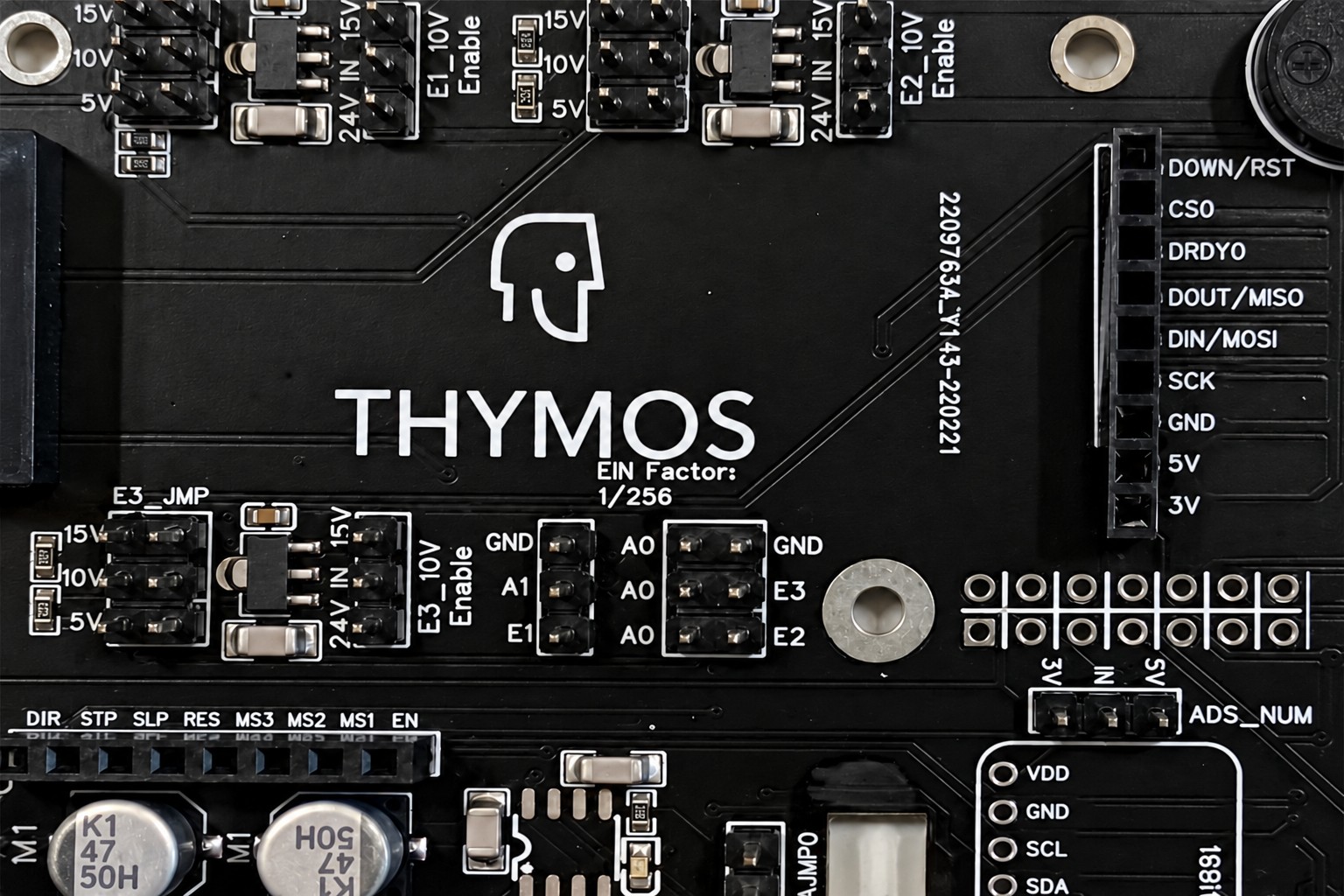
Open-source hardware and software with standard aluminum profiles and 3D-printable parts. Easily modify, expand, repair or replicate the system for specific research and educational needs.
Control motion, monitor measurements and run programmable sequences through an intuitive web interface, with console access for advanced control, diagnostics and system integration.
Slide to preview a setup and explore its details.
Choose the orientation that suits your specimen and test method, with the same core hardware and control chain.
A compact footprint and a direct vertical load axis for tension, compression and conventional material testing.
Apply load horizontally while supporting specimens that cannot carry their own weight, or when the experiment needs special access to the specimen or working area.
Use a side-oriented frame for horizontal loading with an alternative working area. Gravity can act on the specimen as an additional load, for example through an attached weight.
Custom setups
Reconfigure the frame or combine multiple machines for specialized, coordinated test arrangements.
The same actuator, controller and measurement workflow.
Adapt the orientation to your geometry and fixtures.
Keep a clear view for optical measurements.
Combine machines for coordinated experiments.
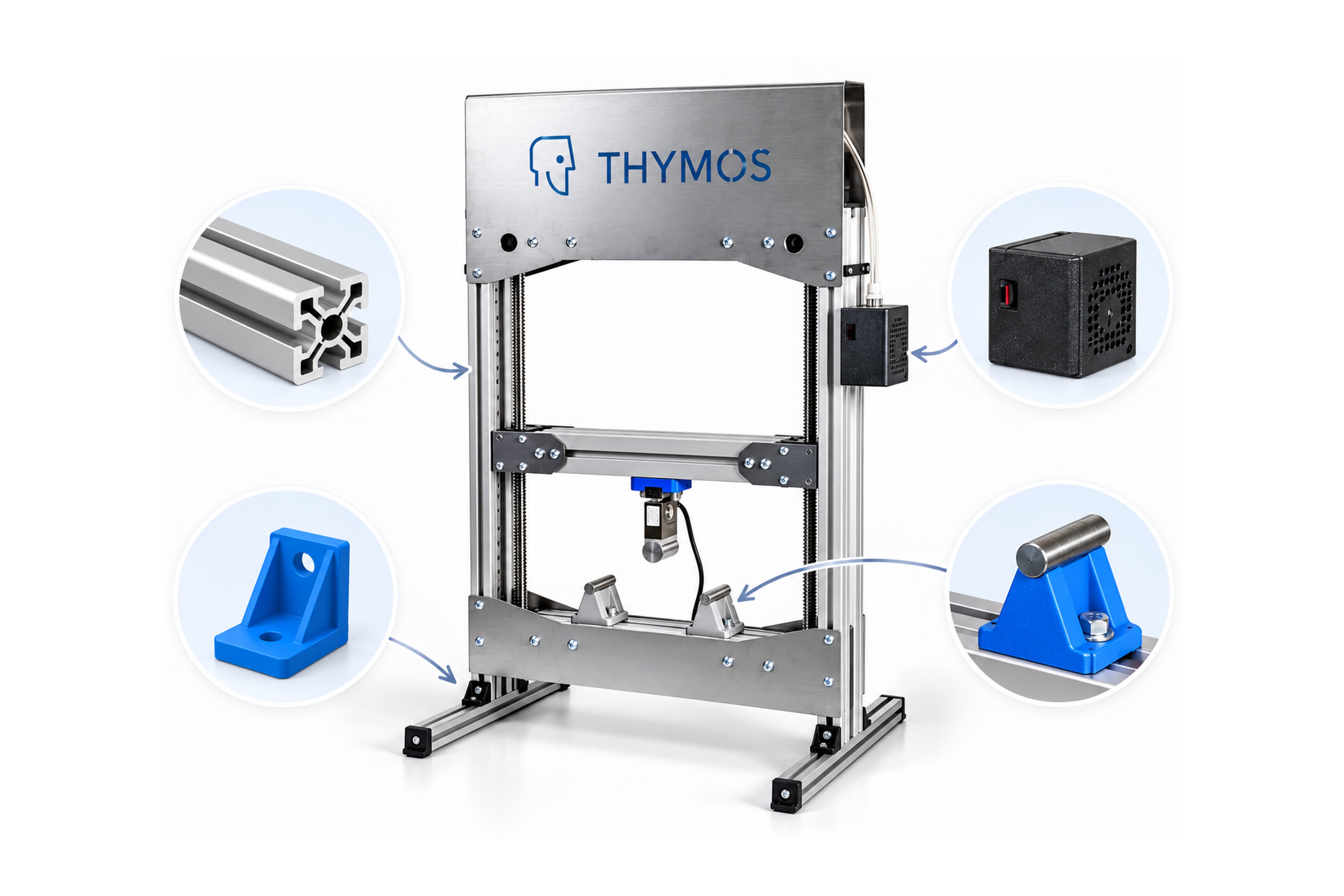
Thymos uses standard T-slot aluminum profiles, replaceable fixtures and 3D-printable parts to create a modular mechanical base that is easy to adapt, extend and rebuild for different setups.
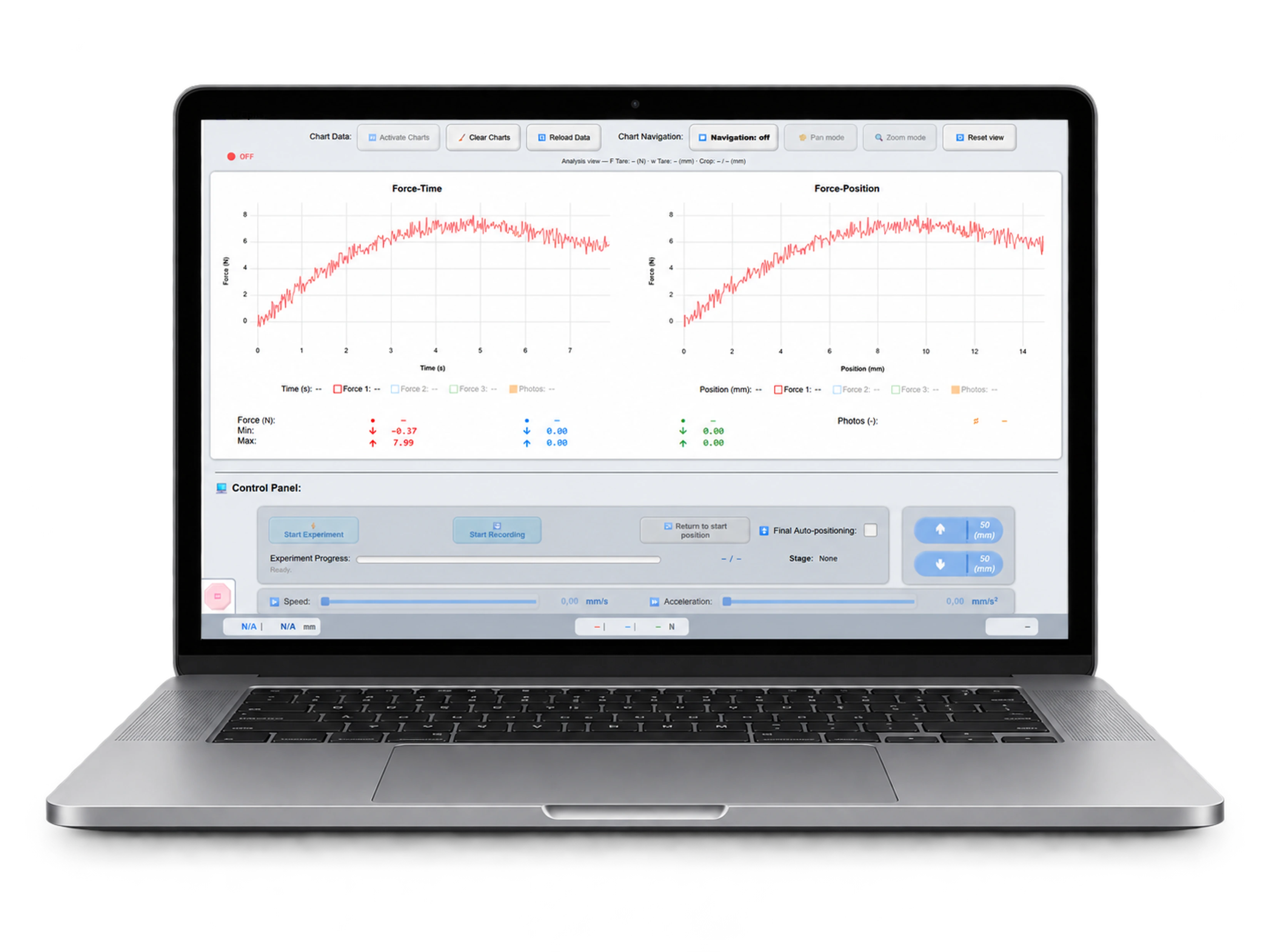
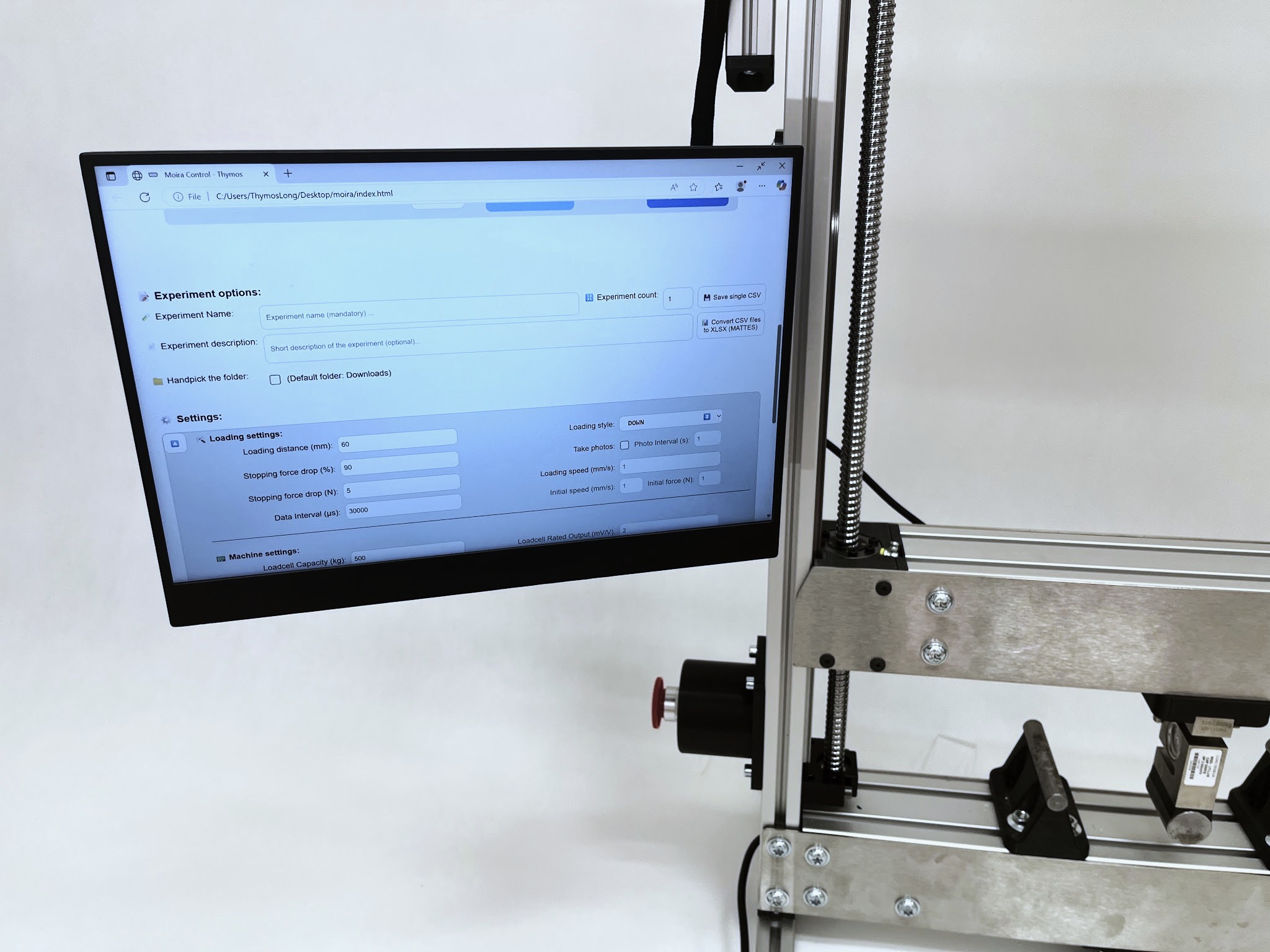
Moira is a locally running, web-based workspace for preparing experiments, running test procedures, inspecting recorded data and creating outputs, independent of the device’s operating system.
The interface can also be used from a phone or tablet to remotely supervise a running setup.
Main workspace
Remote device
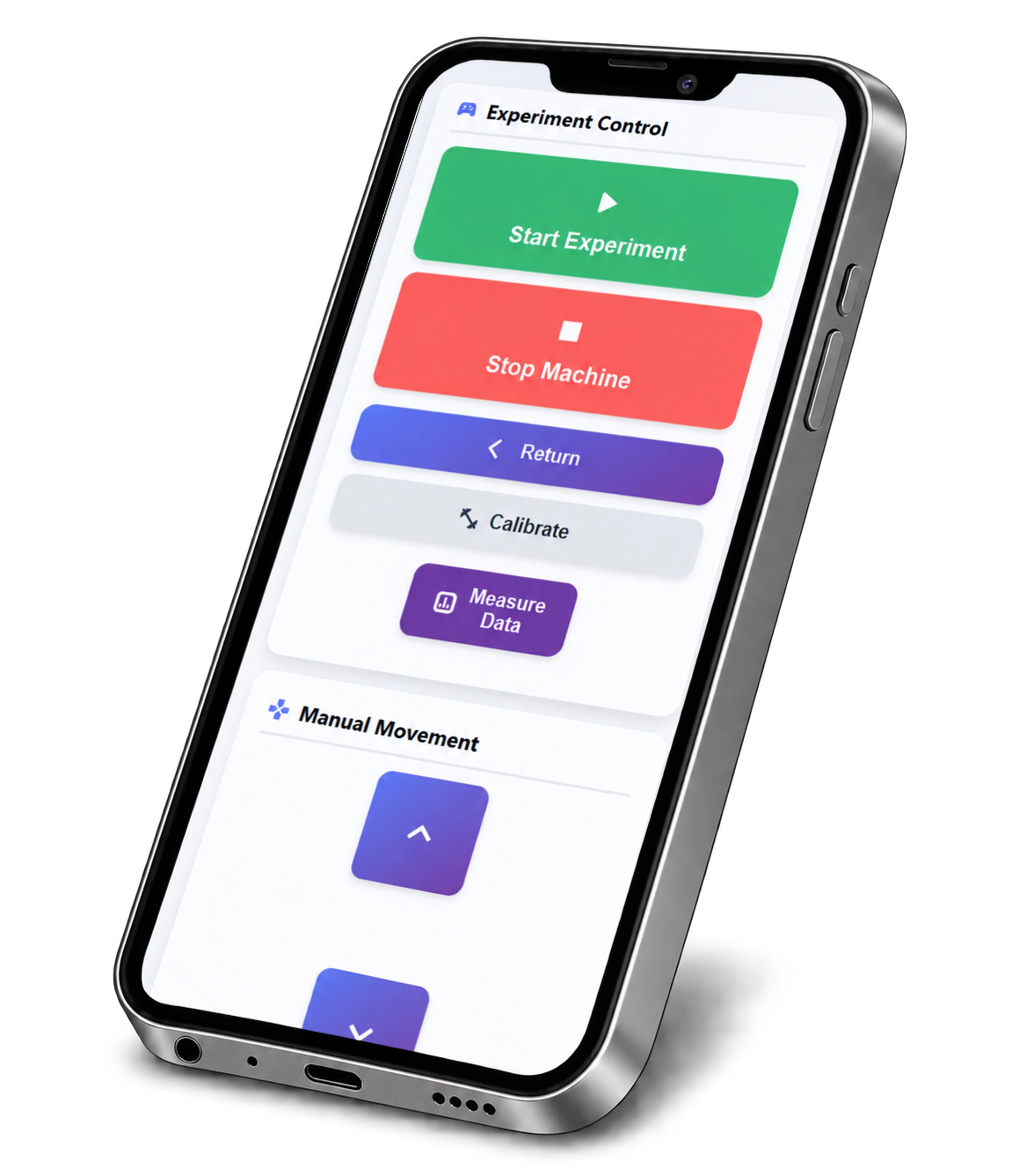
Use Moira on desktop systems and supported mobile devices, including phones used as a remote interface for monitoring and control.
Build repeatable loading procedures and use support for ISO-based test workflows where standardized steps, limits and recorded values are required.
Prepare test outputs for PDF, LaTeX, Microsoft Word and additional data or report formats without rebuilding the results manually after every experiment.
Control, measurement and experiment data are handled locally in the browser and on the connected device. External cloud services are not required for the core testing workflow.

Concrete · Springs · Foams
Compression of conventional, springs, cellular structures and other components, with configurable travel, force limits and hold steps.
View animation
Silicons · Lattices · Textiles
Tensile loading of compliant materials, fibers and small coupons using grips adapted to the specimen geometry.
View animation
Plastics · Alloys · Timber
Three-point or four-point bending and custom fixtures for measuring load, displacement and stiffness of tough specimens.
View animation
Components · Composites
Repeated loading between defined positions or force levels for cyclic response, durability studies and proof-of-concept fatigue experiments.
Other supported or configurable protocols
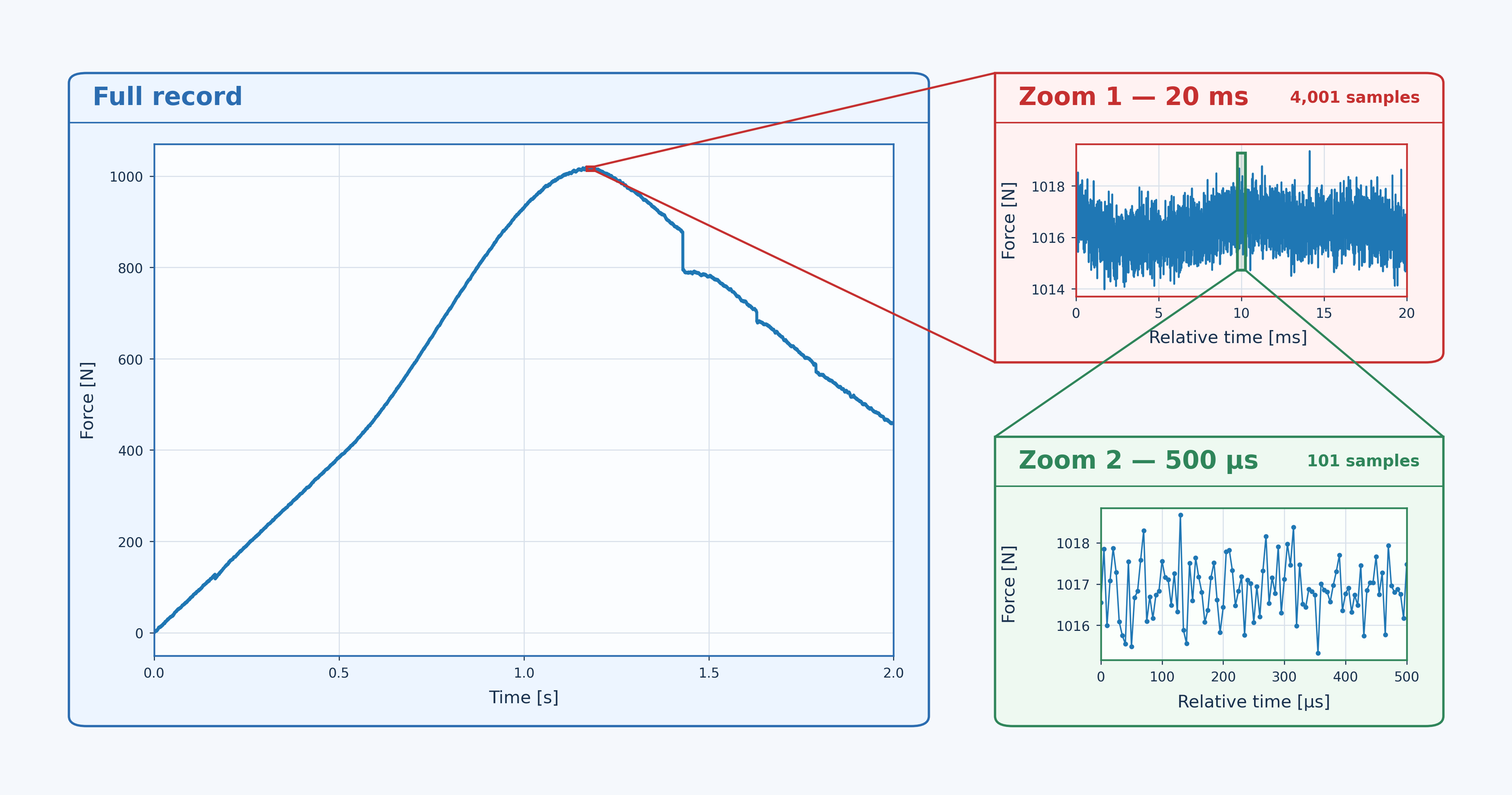
Monitor position, force and connected sensor channels while a test is running, with adjustable high-rate data acquisition tailored to the test type and duration for dynamic events and detailed analysis.
Extend force measurement with temperature, CO₂ levels, laser distance, digital calipers, scales and other compatible sensors required by the experiment.
Select the loadcell and configuration for the expected force range to get higher precision while keeping the same measurement and software workflow.
Use measured position and force as limits or inputs to automated test steps instead of relying only on a fixed time sequence.
Operate several connected or independent Thymos units within one experiment and coordinate their motion when the specimen or setup requires synchronized loading.
Measurement range, resolution and accuracy depend on the selected sensor, fixture and mechanical setup. The instrumentation should therefore be matched to the expected test range rather than treated as one fixed machine specification.
Digital Image Correlation (DIC) adds contactless displacement and deformation measurements to force, position and timing data during testing.
Visual displacement can also control loading routines, allowing tests to respond to specimen behavior rather than relying solely on actuator travel or predefined timing.
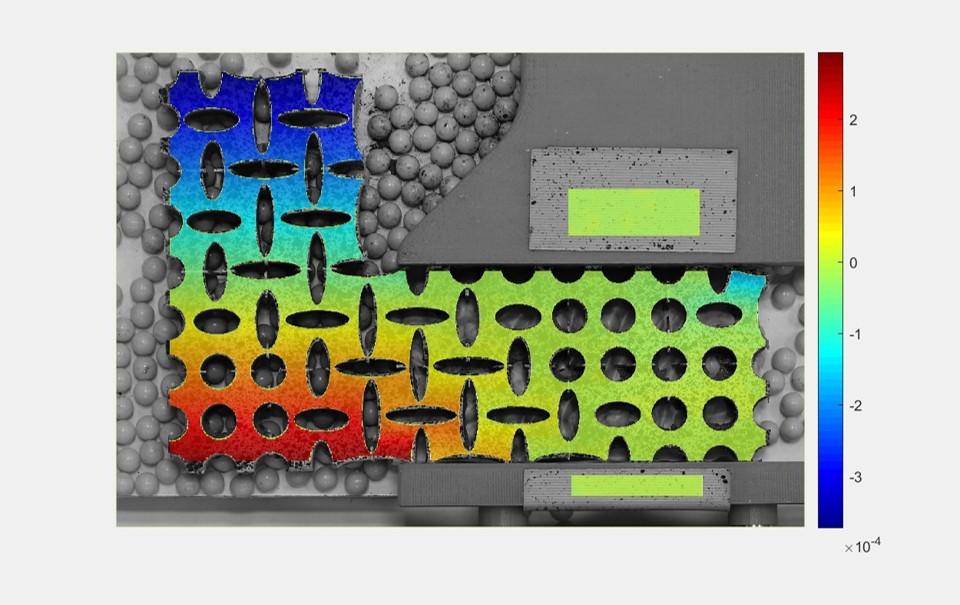
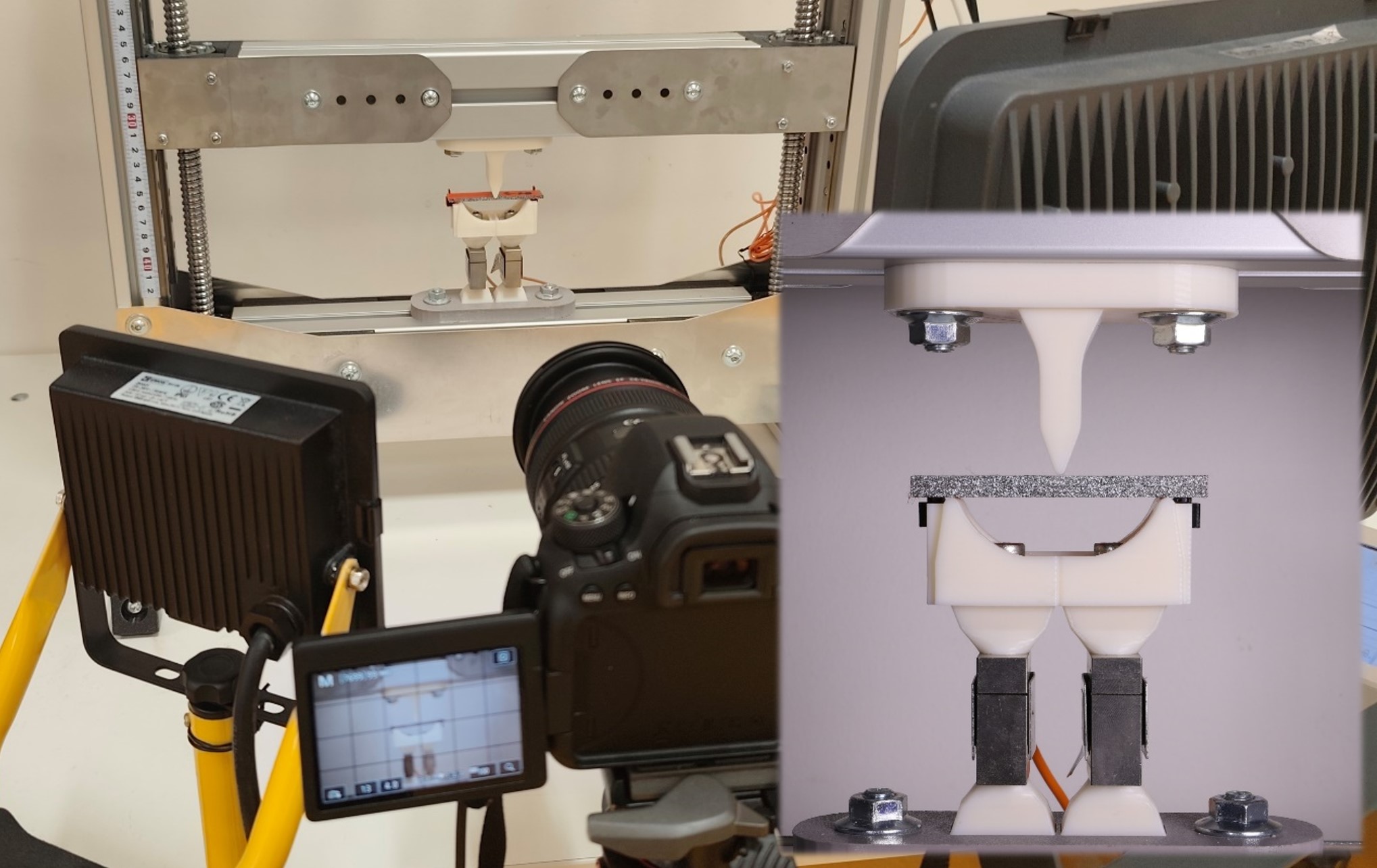
Early horizontal experimental setup with printed fixtures and a cellular specimen.
See more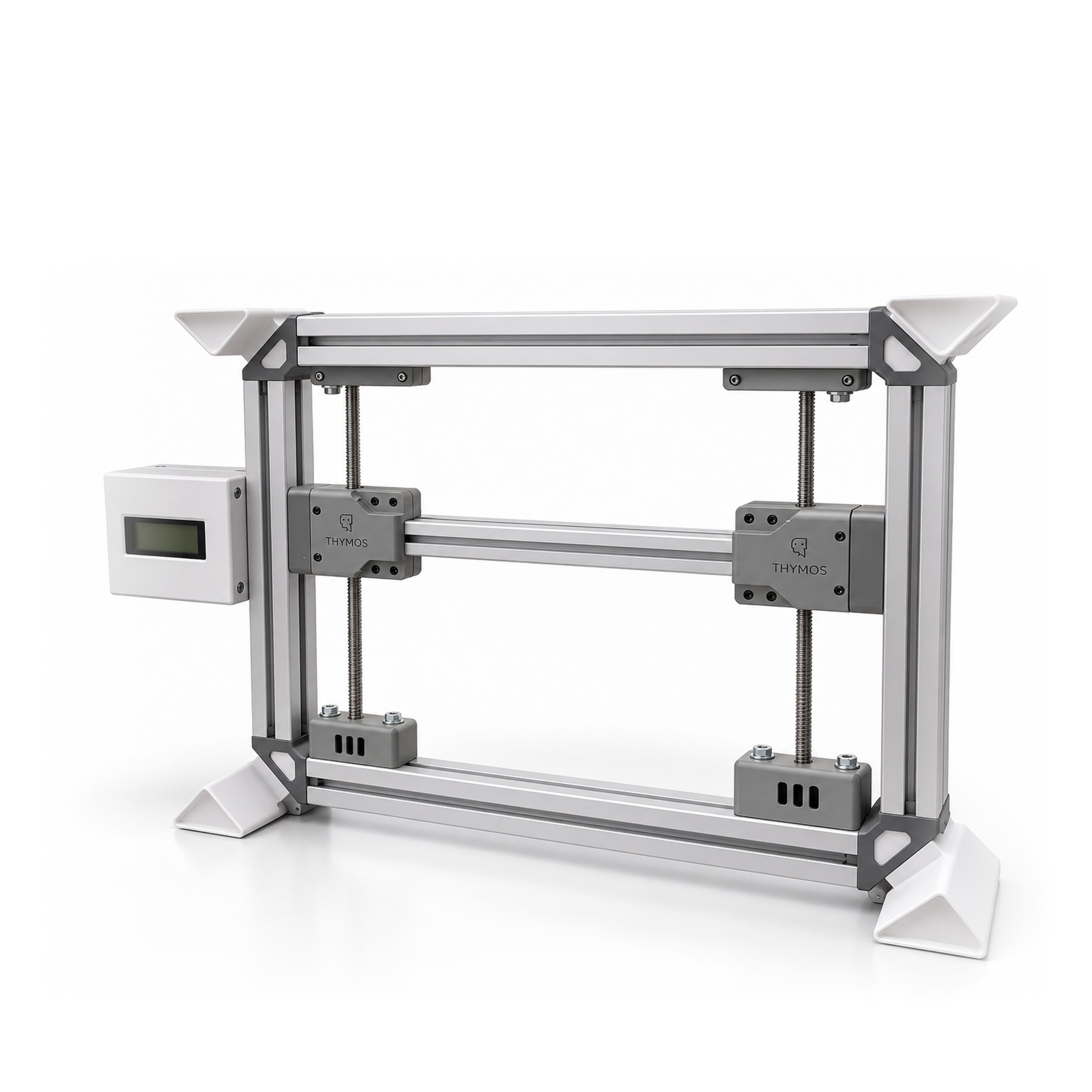
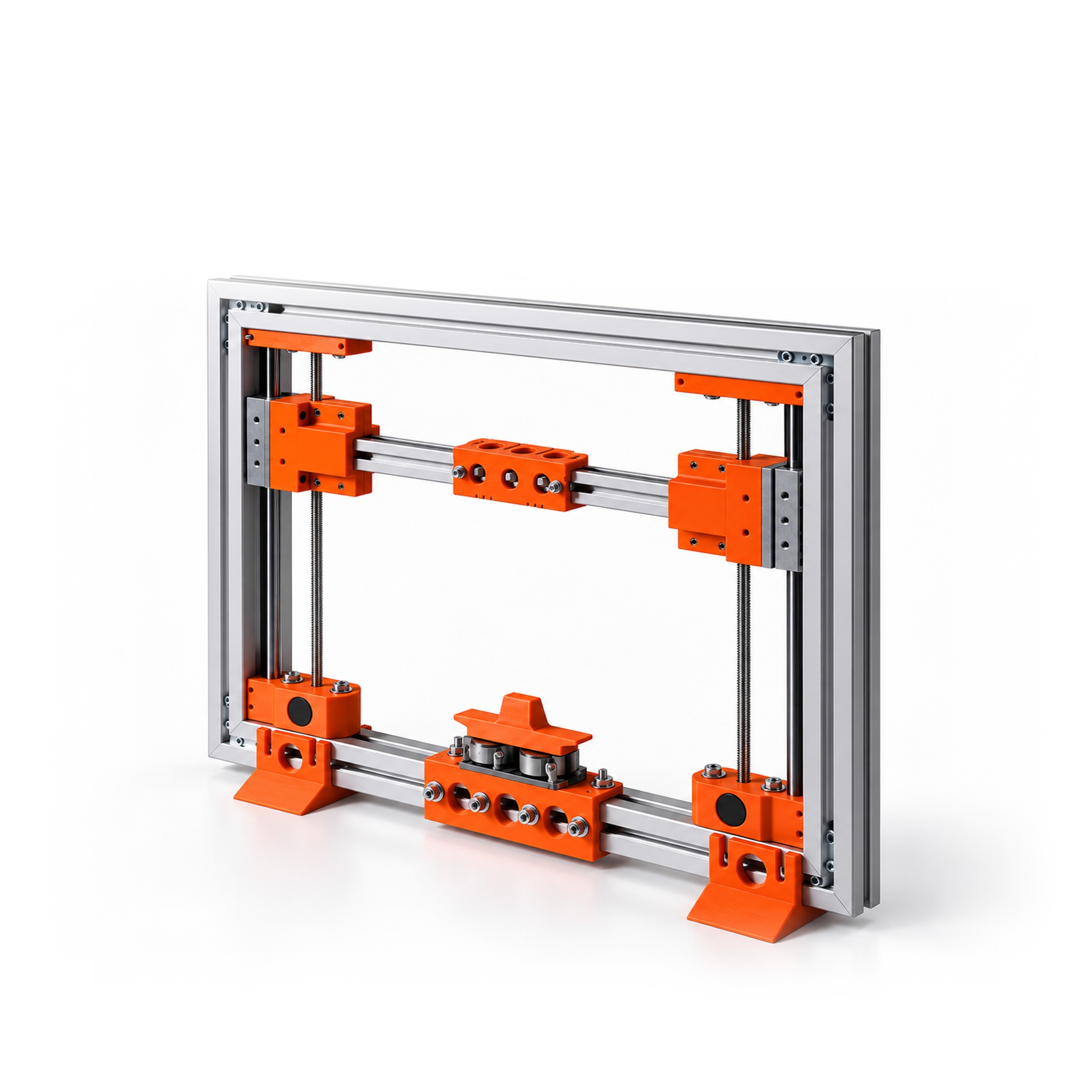
Early workshop prototype centered on a compact, lightweight frame and simplified mechanical layout.
See more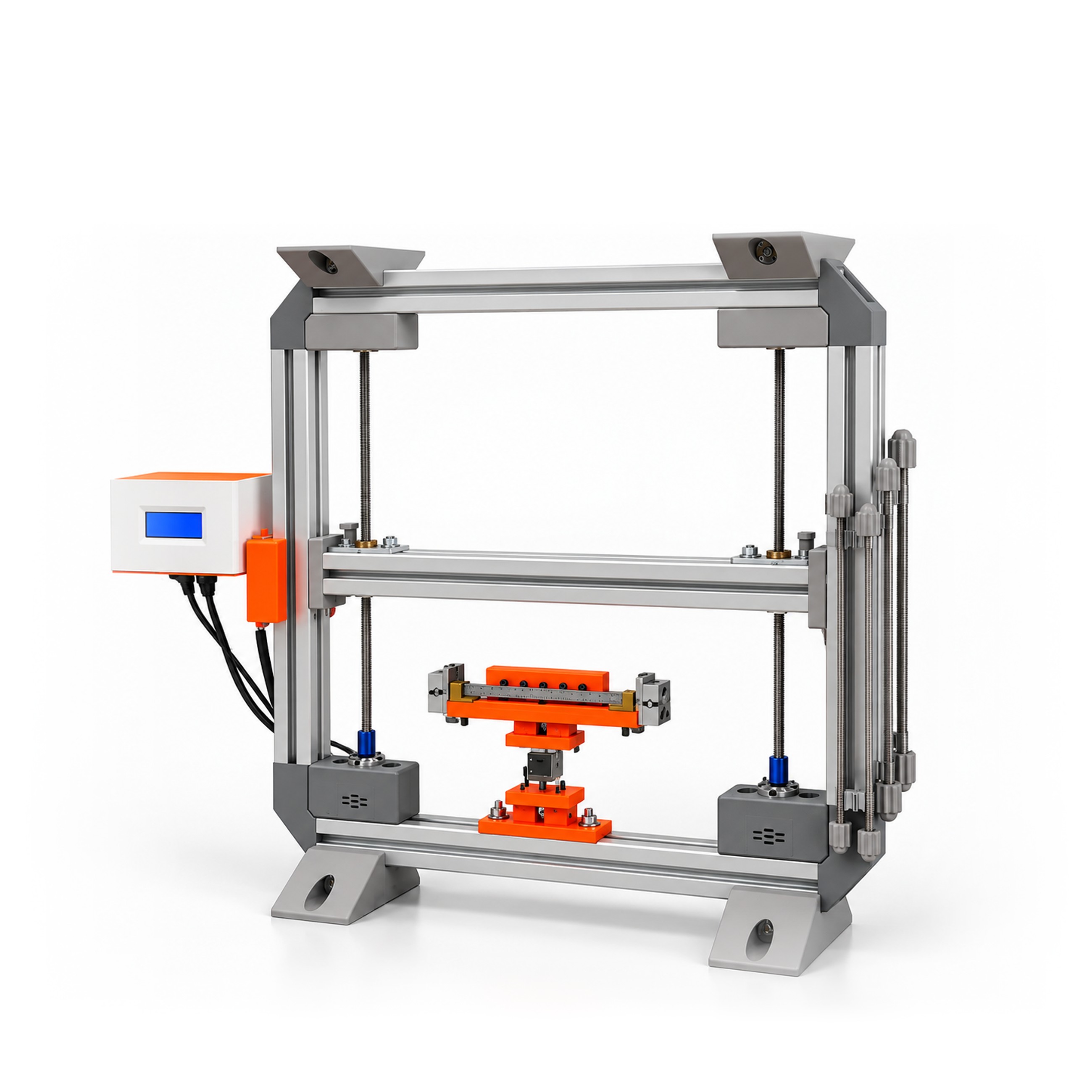
Larger working area, simplified construction, and an improved horizontal setup with adjustable working height.
See more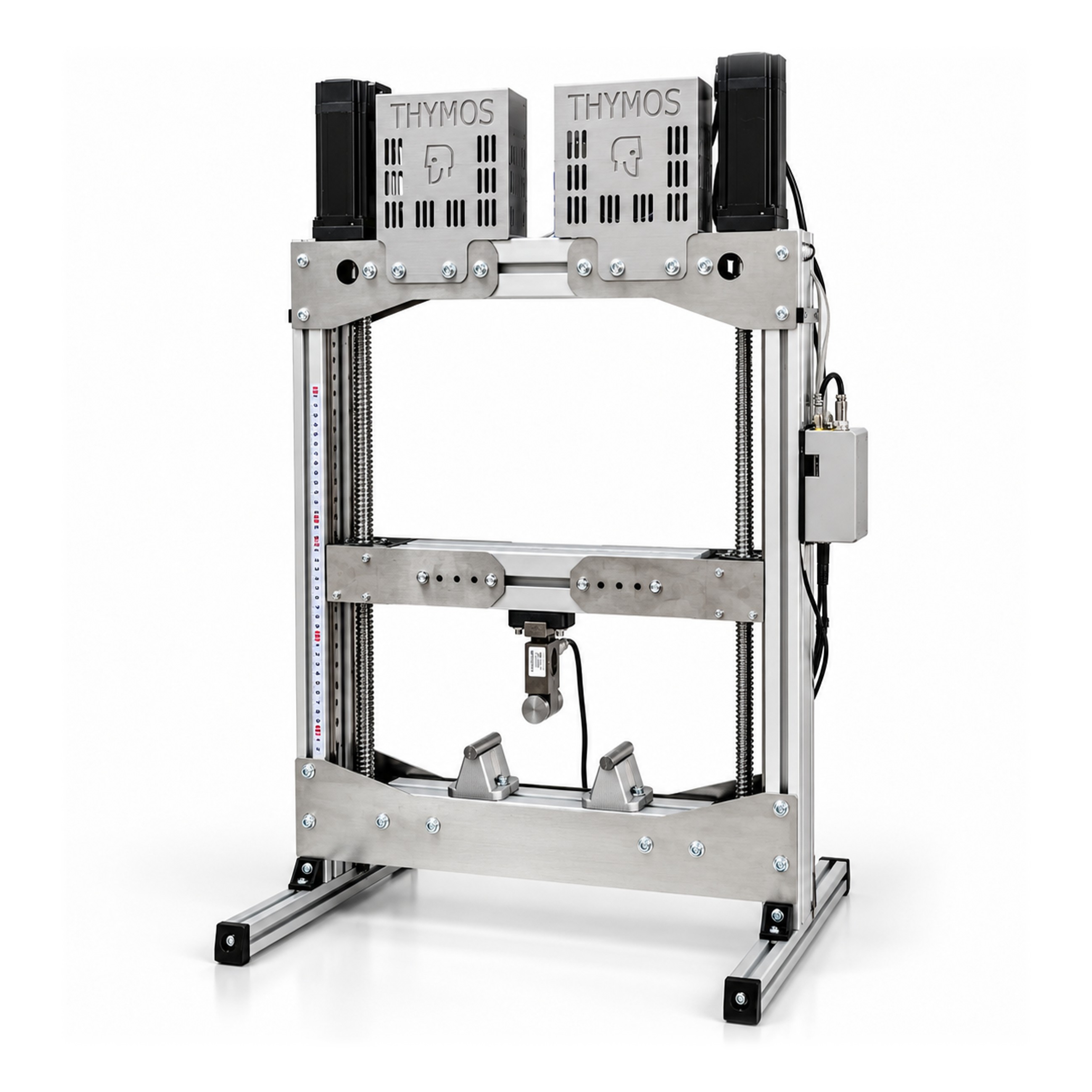
Transition to a more powerful vertical testing frame and clearer machine layout.
See more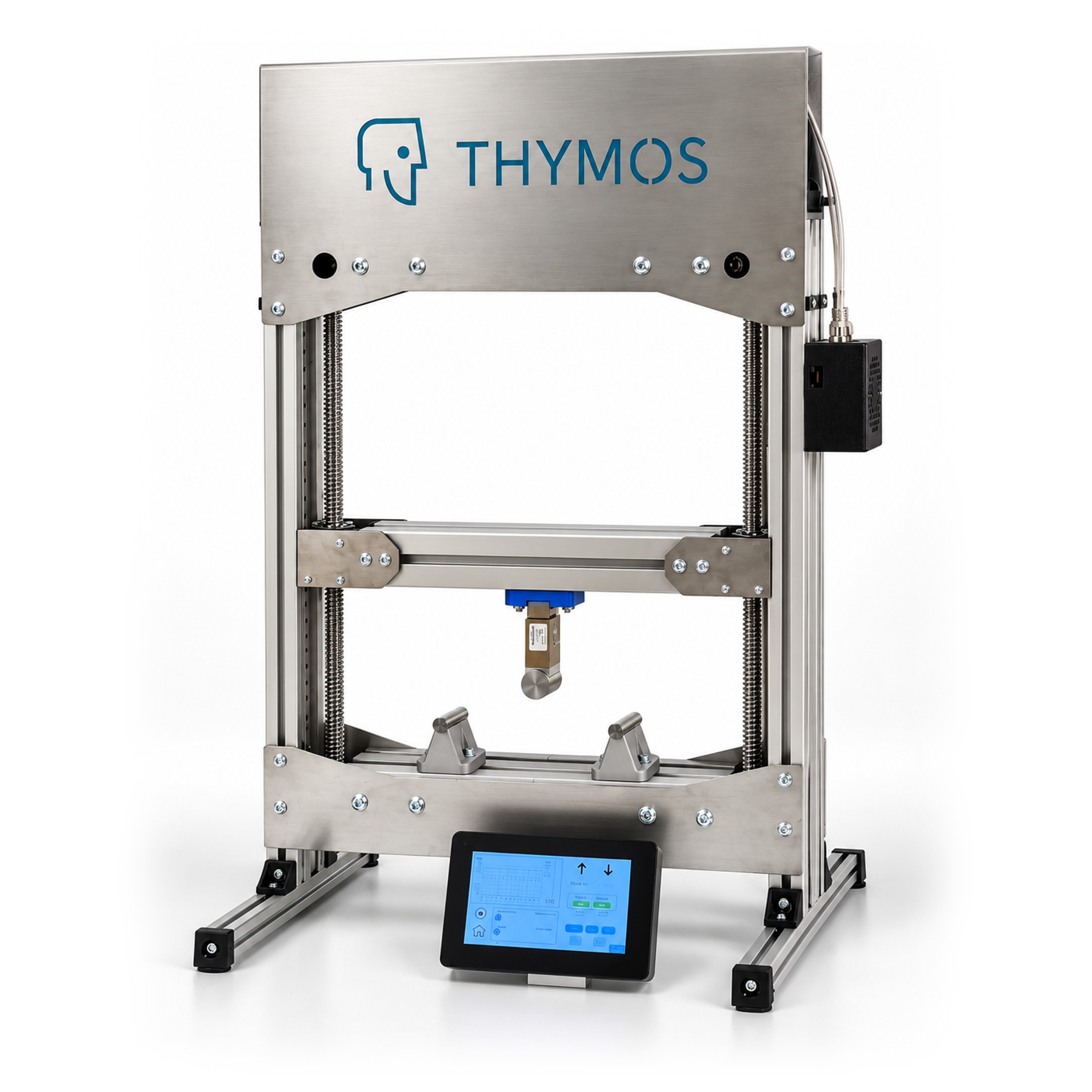
Vertical development version with more integrated electronics, cabling and local control.
See more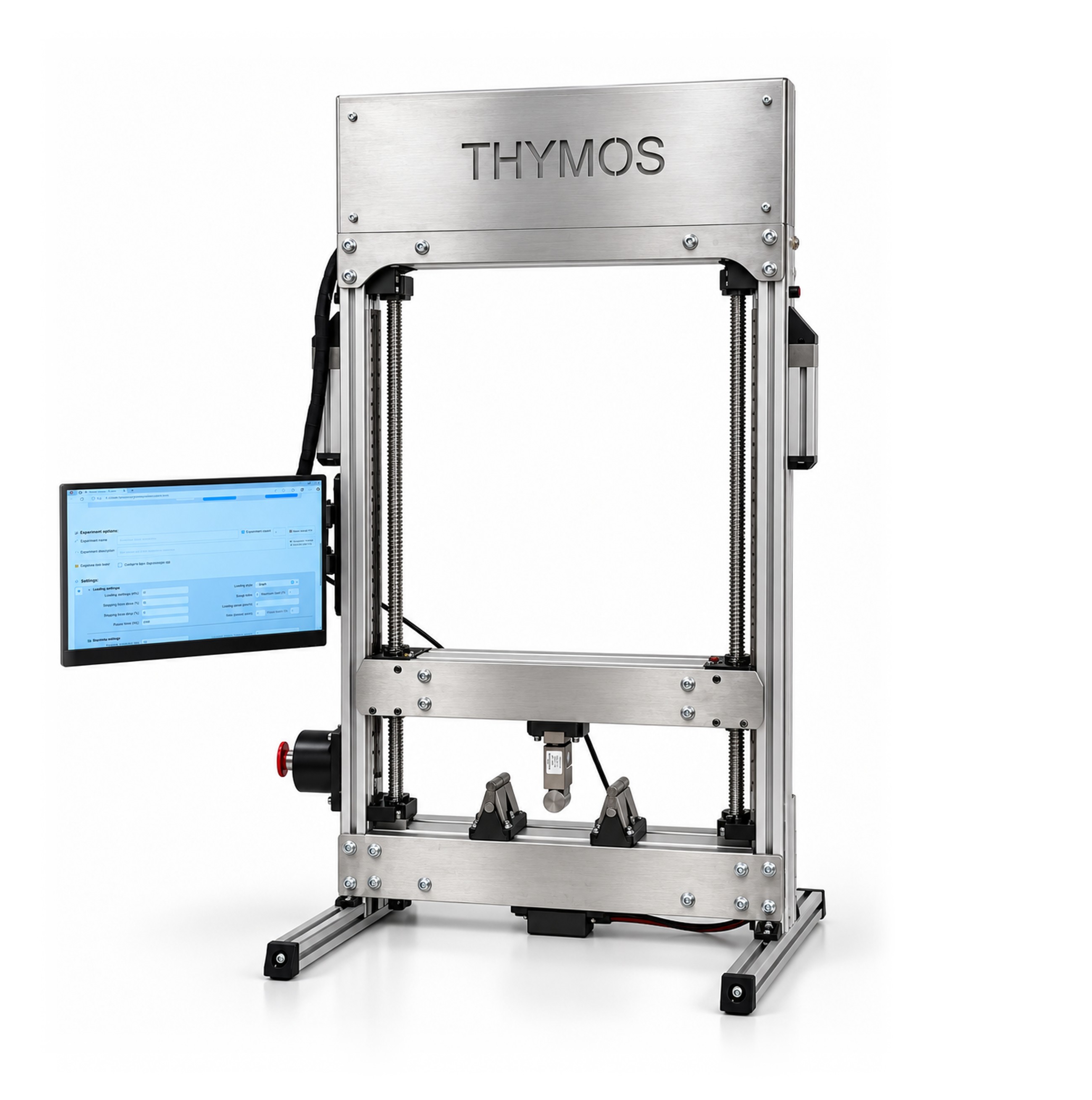
Later refined configuration with a cleaner frame and external display for control and monitoring.
See moreVideo overview
A short video overview of the machine in vertical and horizontal configurations, example mechanical tests and the Moira user interface for control and measurement.